news
Chattanooga’s Smart Moves Tackle Some of Tennessee’s Worst Traffic Bottlenecks
Amid heavy freight traffic and urban growth, Chattanooga employs innovative technology and multimodal transport options to ease congestion compared to peer cities worldwide.
How we reported this
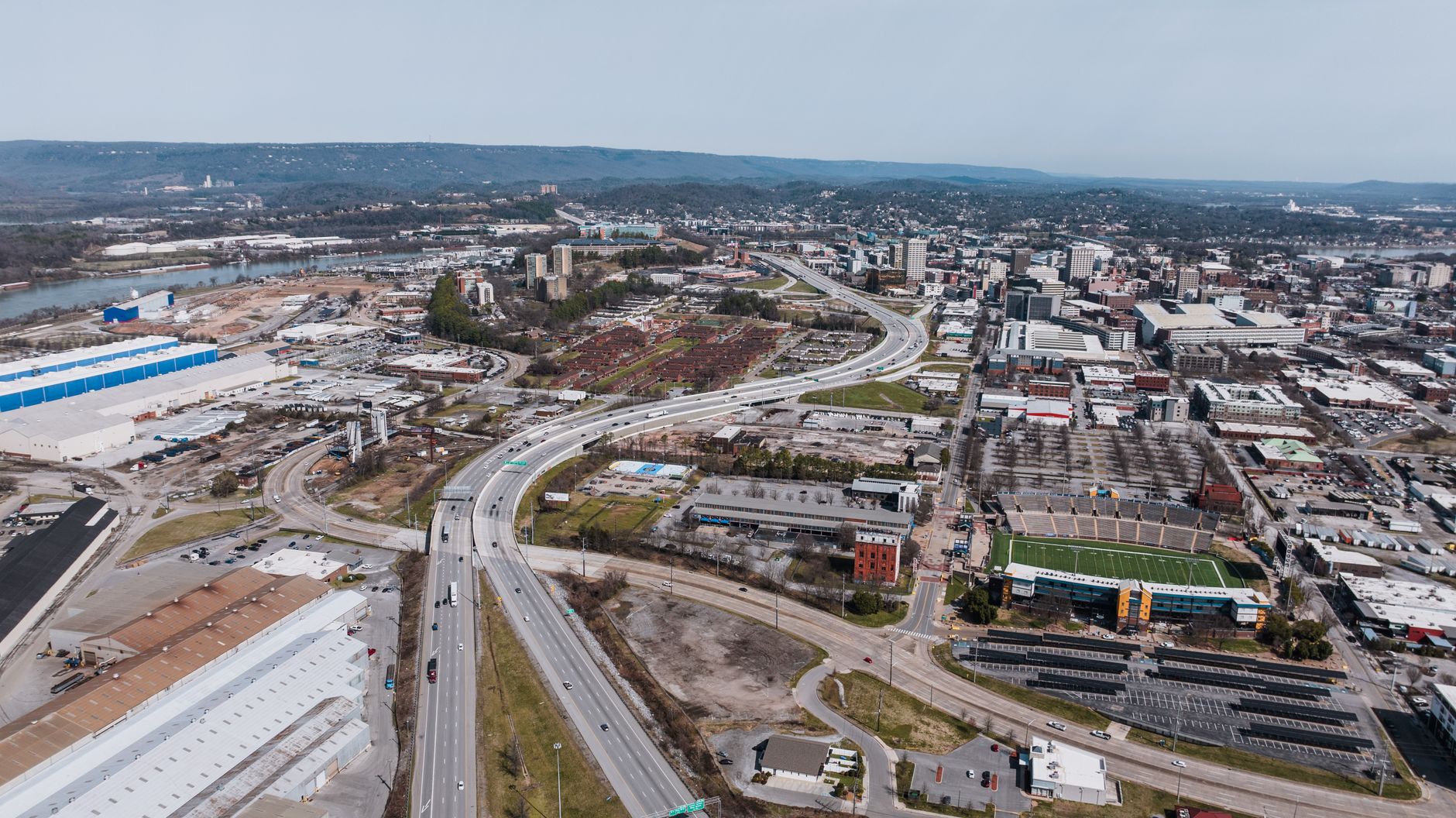
Chattanooga ranks second-worst in Tennessee for traffic congestion, with drivers losing an average of 26 hours annually to gridlock on key corridors, largely driven by the 20,000 trucks passing daily through the I-75/I-24 interchange, according to a recent assessment by transportation analysts.[1] Responding to this challenge, the city has embarked on a substantial smart technology overhaul aimed at improving traffic flow through real-time adaptive management.
Smart Traffic Management and Infrastructure Upgrades
One of Chattanooga's focal initiatives is the installation of Gridsmart GS3 Fisheye Camera Vehicle Detection Systems. These advanced sensors capture live traffic data, enabling adaptive signal timing and reducing unnecessary delays on busy routes. The comprehensive implementation targets 86 downtown intersections using LiDAR technology, an upgrade supported by a $4.5 million federal grant dedicated to real-time traffic monitoring.[9][2] The improvements along the Highway 153 corridor are set for completion by mid-December 2025, aiming to ease traffic burden on one of the city’s most congested highways.[2]
Furthermore, Chattanooga’s integration of its municipally owned EPB fiber-optic network allows high-speed connectivity for traffic sensors and supports autonomous vehicle testing, a feature few cities of comparable size can claim. The city’s participation as one of two U.S. municipalities in the G20 Global Smart Cities Alliance demonstrates its commitment to piloting next-generation transportation technologies like AI-driven crash analytics.[6]
Multimodal Options: Buses, Bikes, and Pedestrians
Complementing high-tech traffic tools, Chattanooga fosters sustainable transport alternatives. The Chattanooga Area Regional Transportation Authority (CARTA) maintains between 15 and 17 fixed bus routes, supported by a free Downtown Electric Shuttle that circulates every 10 to 15 minutes on weekdays through popular tourist districts, providing a reliable transit backbone.[3]
Chattanooga also distinguishes itself regionally with Bike Chattanooga, the first citywide bike-share system in the Southern United States. Available at over 40 locations, it offers a fleet of more than 300 bikes.[4] This effort integrates with a 23-plus-mile riverside greenway and one of the longest pedestrian bridges nationally, connecting Northshore to Southside neighborhoods, encouraging residents and visitors alike to opt for active transport modes instead of driving.[4]
The city's strategic location at the confluence of Interstates I-24, I-75, and I-59, combined with proximity to Chattanooga Metropolitan Airport offering direct flights to eight major cities including Atlanta and Chicago, underscores its importance as a transportation hub while intensifying traffic pressures.[5]
Balancing Congestion and Innovation
Despite Chattanooga’s significant investments in traffic technology and diversified transport modes, severe congestion persists largely due to heavy truck volumes on interstate corridors. The average 26 hours lost to traffic annually illustrates the ongoing challenge.[1] Still, the smart city approach, combining federal funding, municipal fiber networks, AI analytics, and transportation alliances, positions Chattanooga ahead of many peer cities addressing similar issues.
The multi-year, $683 million capital improvement plan bolsters this approach with over $66 million allocated for pavement management and road rebuilding efforts, ensuring infrastructure keeps pace with technological upgrades.[7]
Practical advice for commuters includes experimenting with CARTA bus routes or the free Downtown Electric Shuttle to avoid parking congestion and highway bottlenecks, while cyclists and pedestrians can take advantage of the extensive riverwalk trails and bike-share options. Motorists should anticipate continued improvements as adaptive traffic systems fully roll out, particularly along Highway 153, due to be upgraded by the end of 2025.[2]
By embracing a layered strategy of technology, transit options, and active transport infrastructure, Chattanooga exemplifies one mid-sized U.S. city’s pursuit to mitigate entrenched traffic woes amid growing urban pressures.
References Sourced but Not Limited to:
- chattanooga.gov · Transportation services
- tn.gov · Chattanooga Coordinated Plan
- transportation.gov · TN Chattanooga
- chattanooga.gov · Transportation planning
- chattanooga.gov · Major signal retiming technology upgrade intended smooth commutes
- herechattanooga.com · Chattanooga traffic congestion 2
- chattanooga.gov · FY2026 Mayor s Budget Proposal Presentation